
News
Math Professional Learning Sessions
Professional Development for Math Educators
Effective teacher practice is refined through a structured, collaborative effort among teachers within the school system.
We offer professional learning sessions to deepen teacher knowledge of pedagogy and content and sessions to guide district leaders to effectively support this type of teaching. Our professional development protocols assume that good teaching can be learned, and that such learning depends on district structures that facilitate ongoing professional learning.
Math Teaching and Learning
Professional Learning for Math Educators
When our students receive a strong K-12 education in mathematics, we set them up for future success in postsecondary education and the modern workforce.
The Dana Center offers a variety of professional learning opportunities for math educators to help them serve their students. From professional learning sessions using the latest educational research and standards to innovative learning moments on Facebook, we offer teachers the support, tools, and inspiration they need to be more effective classroom educators.
Higher Education
In today’s information economy, the demand for people with strong mathematical skills continues to grow. Yet, the educational experiences students encounter have not kept pace with the diverse ways mathematics is now used. This diversification calls for new mathematics pathways to support higher education students in the attainment of postsecondary degrees and certificates.
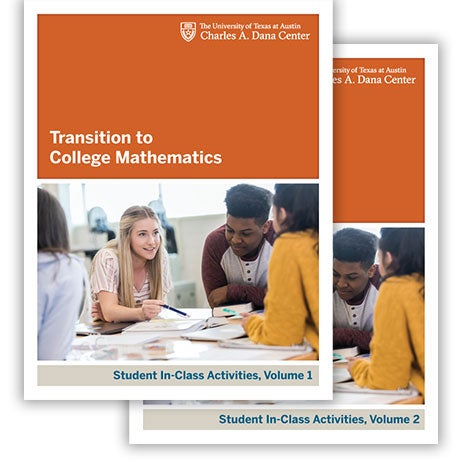
Transition to College Mathematics: Student In-Class Activities
Our Impact
Making a Difference in Mathematics and Science Education
At the Dana Center, we bring innovative thinking and best practices to support the transformation of education systems at scale through pedagogy, curriculum, instruction, and professional learning. And after nearly 30 years of hands-on experience in K–12 and higher education, we understand what it takes to create the effective alignment of curriculum, instruction, policy, and practices.
Communications
Sharing the Dana Center Story
The communications team at the Charles A. Dana Center supports the Center through a portfolio of marketing, communications, and digital initiatives. To learn more about the Center and its reach, explore the resources below or feel free to contact us.
For Media Inquiries
Please contact Alison Kothe.