

Celebrating a Monumental Year for the Literacy First Program
At the Charles A. Dana Center, we are committed to ensuring that all students have access to, and success in, an excellent education in math, science, and literacy. One of the ways we do this is through the Literacy First program, which offers high-impact literacy tutoring in English or Spanish to children in the early grades.
Literacy First aims to ensure that every child builds the foundational reading skills essential for long-term academic success and personal growth. In 2024, only one-third of fourth and eighth graders reached the National Assessment of Educational Progress’ proficient level in reading (National Assessment Governing Board, 2025). Literacy First intervenes early, helping students develop strong foundational reading skills that are critical to both academic and personal growth. These skills equip children to excel in life and realize their dreams.
The Literacy First program’s 2024–2025 impact is a testament to the power of daily, targeted, one-to-one instruction. With the additional support of a Literacy First tutor, over 1,000 students, who initially had difficulty reading, were able to read at grade level with confidence by the end of the school year.
Fueling Lifelong Learning Through Literacy
While math and science may seem separate from literacy, all three disciplines are deeply interconnected. Students depend on strong literacy skills to tackle word problems, comprehend scientific procedures, make sense of new vocabulary, and analyze data.
The ability to read fluently is often the difference between thriving academically and struggling. In fact, students who can read proficiently by age eight typically achieve higher test scores and better performance in math and science (Purpura et al., 2011). They also are more likely to graduate high school or college, and have greater career success in the future (Blanchard, 2023; Herring et al., 2022).
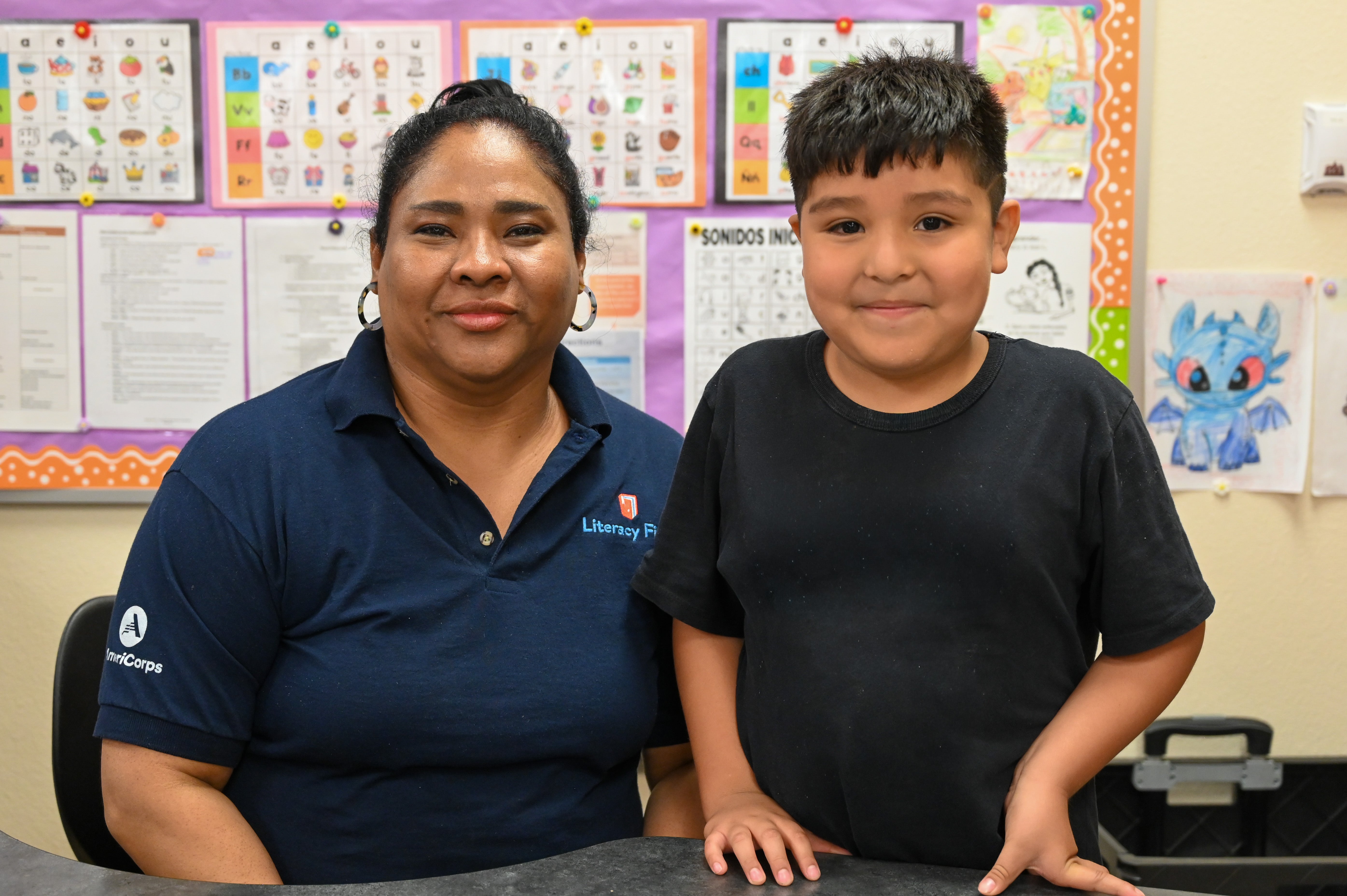
The Literacy First program works primarily with students in public elementary schools. Literacy experts on staff at the Dana Center train and manage tutors, who deliver the program on campuses through daily, 30-minute sessions with students. Our literacy staff also teach school district staff to implement the program in a self-sustaining manner.
Literacy First uses proprietary curricula and custom-built data systems to drive positive student results. On average, Literacy First students demonstrate 2–3 times the growth on targeted reading skills assessments compared to their peers who qualified for the program but did not participate in it.
Greg Wilkey, Principal at Literacy First campus in Hamilton County Schools, as quoted in the Chattanooga Times Free Press said:
[The students are] more engaged. They're more likely to answer questions. They're able to complete tasks with less support than they were in the beginning. The teachers are seeing that kids are able to use those skills across content, which is just a dream. It's the hope.
By the Numbers: Literacy First’s 2024–2025 Results
The 2024–2025 school year was Literacy First’s most successful year yet, reaching more students than ever before. Highlights from the program’s impact report include:
30 years of teaching students how to read
55 schools served across Texas, Tennessee, and California
2,338 students supported by Literacy First tutors, with over 32,000 students served since the program began
84% of students in the program showed growth in targeted reading skills
125,000 sessions of literacy tutoring provided
So many determined students, dedicated tutors, and communities that believe in the transformative power of education are behind each of these numbers. To explore these stories, read the full impact report. Sara Tapia, Assistant Principal at Literacy First campus in Austin ISD, as quoted in The Austin Chronicle shares:
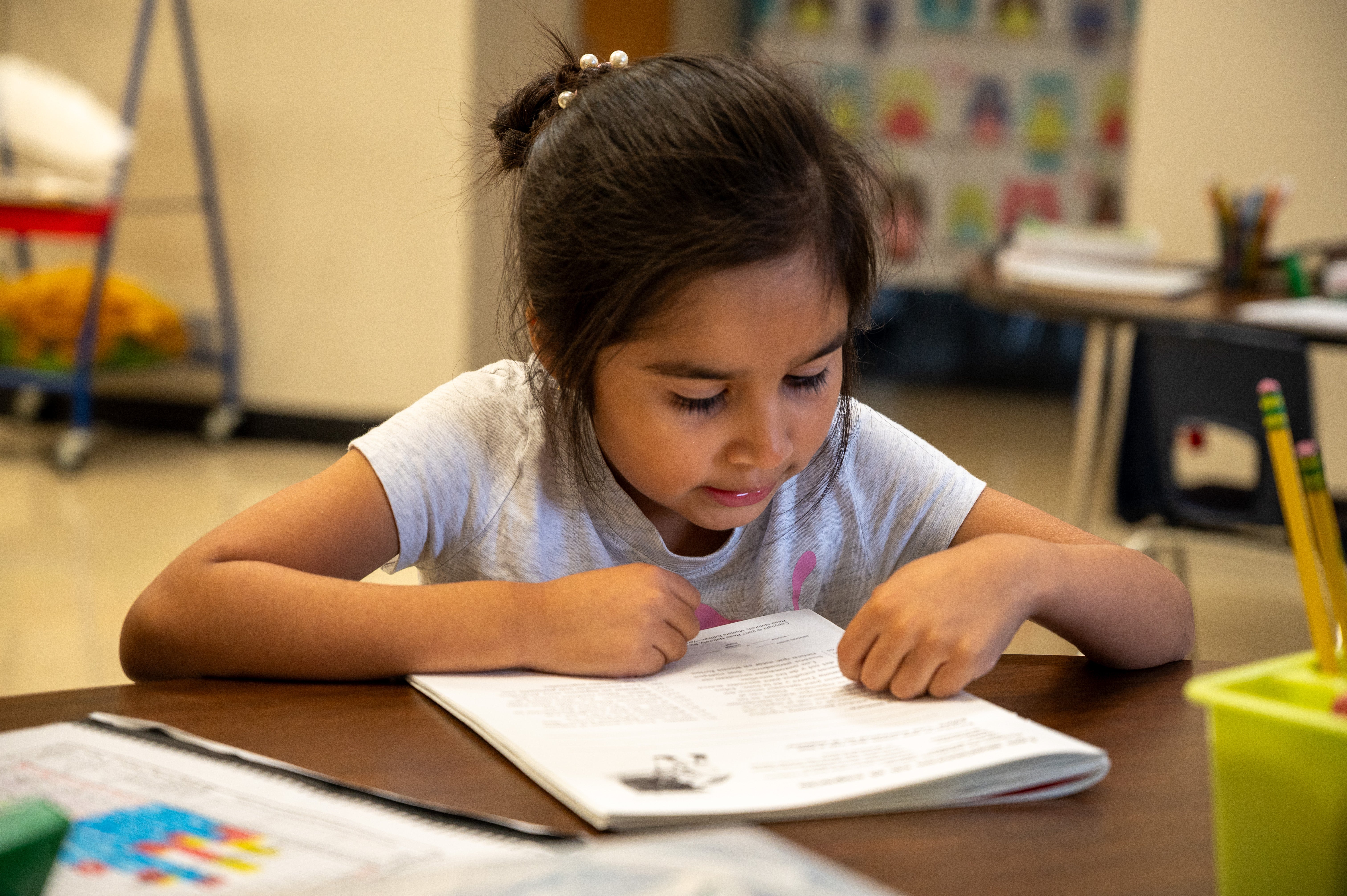
That tutor may be the one adult that the student sees one-on-one for 30 minutes in their entire day. It’s this beautiful moment. You’ll see our students look at the clock— they know when their tutor is going to come and they’re sitting and waiting. And we’ve seen an increase in attendance from these students, because they are typically struggling and maybe have had attendance issues in the past. But knowing that they are going to have that one-on-one adult attention and reading intervention, that’s their moment to shine and be with that adult.
Looking Ahead
At the Dana Center, we celebrate the remarkable work of the Literacy First program and look forward to deepening our impact in the literacy space in the coming years. Our team has built strong networks to drive student success in mathematics, and we hope to engage transformational educators across the country to address pressing early literacy needs. By fostering collaboration, innovation, and systemic change across disciplines, we can create a future where every student thrives.
Learn more about Literacy First’s mission, approach, and outcomes in the 2024–2025 Impact Report.
Blanchard, M. (2023). The relationship between socioeconomic status and literacy: How literacy is influenced by and influences SES. Michigan Journal of Economics.
Herring, W. A., Bassok, D., McGinty, A. S., Miller, L. C., & Wyckoff, J. H. (2022). Racial and socioeconomic disparities in the relationship between children’s early literacy skills and third-grade outcomes: Lessons from a kindergarten readiness assessment. Educational Researcher, 51(7), 441–450.
Purpura, D. J., Hume, L. E., Sims, D. M., & Lonigan, C. J. (2011). Early literacy and early numeracy: The value of including early literacy skills in the prediction of numeracy development. Journal of Experimental Child Psychology, 110(4), 647–658.

About the Author
Madeline Townsend
Madeline serves as a communications coordinator for the Center. She primarily works on Literacy First, a project of the Center dedicated to ensuring that all students learn to read by the end of second grade, allowing them to realize their full potential. She manages Literacy First’s communications channels, creates both digital and print content, and collaborates on fundraising campaigns to convey Literacy First’s mission and impact.
Support Literacy First
A gift to Literacy First provides students with a strong foundation so they can thrive in school and in life.